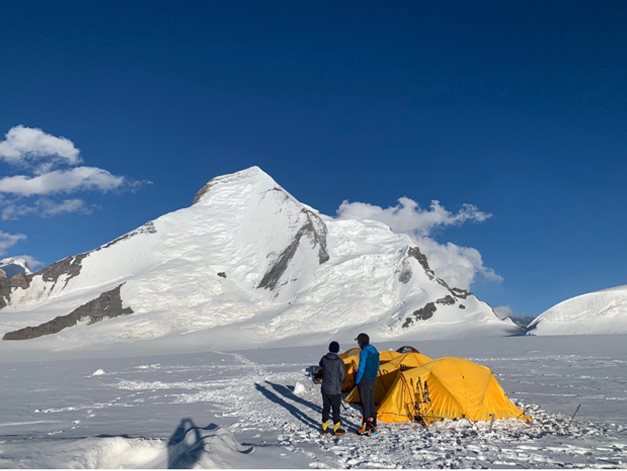
SUMMER CLIMB 7000M+ PEAK IN THE INDIAN HIMALAYAN PLATEAU
Mount Nun, standing tall at 7,135 meters, is the highest peak in the Nun-Kun massif, located in the stunning Zanskar Range of the Himalayas in northern India. The massif also features Mount Kun, which reaches 7,077 meters. Climbing Mount Nun is not just a remarkable achievement; it serves as a gateway for climbers to gain valuable high-altitude experience, potentially paving the way for ascents of even higher peaks, including those over 7,500 meters and some less-technical 8,000-meter summits.
At Zanskar Kanishka Expeditions, safety is our top priority. We believe that a successful and safe expedition relies heavily on the experience and preparedness of each climber. Therefore, we do not accept climbers without prior peak climbing experience. It is crucial that we thoroughly check and verify your alpine and mountain climbing history before you can join the expedition. This ensures that all participants are equipped with the necessary skills and knowledge to tackle the challenges posed by high-altitude climbing. By adhering to these guidelines, we aim to create a safe and supportive environment for all climbers, allowing everyone to fully embrace the adventure that Mount Nun has to offer.
At Zanskar Kanishka Expeditions, safety is our top priority. We do not accept climbers without prior peak climbing experience. It is crucial that we thoroughly check and verify your alpine and mountaineering history before you can join the expedition.
Required Experience: At least four 6,000-meter peaks (e.g., Lobuche East, Island Peak, Chulu West, Kang Yatse I) or experience on Kilimanjaro, Mt. Elbrus, Aconcagua, and Mt. Blanc.
Mount Nun, at 7,135 meters, is one of the most sought-after climbing expeditions in the Indian Himalayas, offering a relatively short approach to base camp. The route is graded AD/4, combining technical climbing with glacier travel. The ideal climbing season runs from June to August, coinciding with the dry period in many other Himalayan regions. Our team will ascend via the western ridge, which is deemed safer and more accessible.
While considered semi-technical, climbers must maintain high physical fitness throughout the expedition. This is a prime opportunity for those looking to tackle a 7,000-meter climb and experience classic mountaineering.
Ladakh, known for its stunning natural beauty and Tibetan cultural influence, features breath taking landscapes, high mountain passes, and historic Buddhist monasteries. It's an ideal destination for both culture enthusiasts and adventure seekers.
History: Mount Nun was first ascended in 1953 by a team led by Bernard Pierre and Pierre Vittoz via the west ridge.
A carefully phased acclimatization schedule starting from Leh.
| Day | Activity & Highlights | Stay / Meals |
|---|---|---|
| Day 1 | Arrival In Leh | B&B |
| Day 2 | Acclimatization Leh | B&B |
| Day 3 | Drive Leh - Pangong | AP Plan |
| Day 4 | Acclimatization at Pangong | AP Plan |
| Day 5 | Drive Pangong - Leh | B&B |
| Day 6 | Drive Leh - Kargil | AP Plan |
| Day 7 | Drive Kargil - Tangol | All Meals |
| Day 8 | Trek Tangol - Nun Base Camp | All Meals |
| Day 9 to 21 | Climbing Period | All Meals |
| Day 22 | Trek Base Camp - Tangol & Drive Kargil | AP Plan |
| Day 23 | Drive Kargil - Leh | B&B |
| Day 24 | Departure from Leh | B&B |
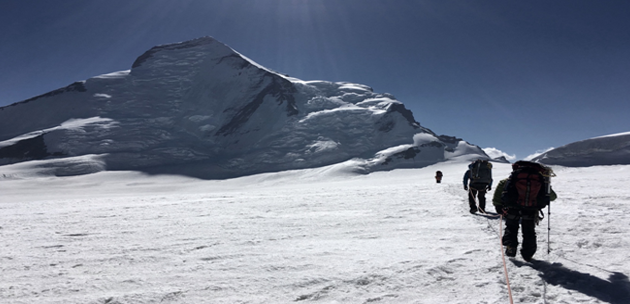
The route involves ascending steep scree slopes and rocky moraine before reaching the glacier. Fixed lines will be used to navigate crevasses, leading to a spacious snow plateau for Camp 1.
This leg features mixed climbing on snow, ice, and rock, utilizing fixed lines to reach Camp 2, located on a crevassed col.
Climbers will rope up or use fixed lines to navigate crevasses, ascending ice slopes to the small plateau of Camp 3.
The summit ascent involves a steep slope of snow and ice, with challenging rock sections below a snow are te. Fixed lines will be used throughout this segment. After reaching the summit, we will begin Our descent, aiming to return to Camp 3. The following day, we will complete our descent to Nun Base Camp.
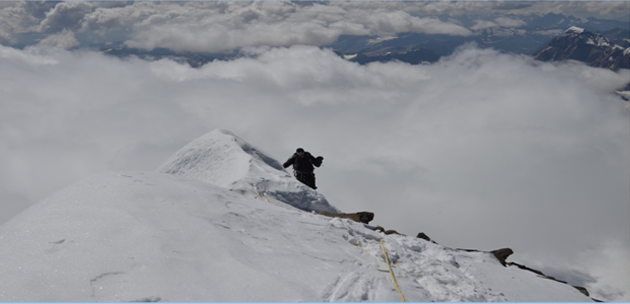
Sudden changes in weather, such as snowstorms, high winds, or plummeting temperatures, can significantly increase risk. Should the forecast predict worsening conditions, it is prudent to turn back rather than proceed, as weather in mountainous regions can shift rapidly and unpredictably.
High-altitude expeditions often present physical challenges, including altitude sickness, exhaustion, or injuries. If a team member displays serious symptoms of altitude-related illnesses, such as Acute Mountain Sickness (AMS), High-Altitude Pulmonary Edema (HAPE), or High-Altitude Cerebral Edema (HACE), the team may need to descend immediately to ensure their safety.
Accumulating snow, rapid temperature changes, or unstable terrain can heighten the risk of avalanches or rockfalls. Should these risks become apparent, halting the climb or seeking an alternate route is essential to ensure safety.
Mountain climbs are often planned with strict turnaround times to avoid being caught in hazardous conditions, such as nightfall or worsening weather. If the team has not reached a critical point by the designated turnaround time, descending is a necessary safety measure.
Strict turnaround times are enforced to avoid being caught in hazardous night conditions or worsening weather on the descent.
A shortage of essential supplies, such as food, water, or fuel, or a breakdown in communication systems can compromise the expedition’s ability to continue safely. In such instances, retreating to a safer location is often the best course of action.
Our guests' words are the most honest reflection of the experiences we craft in the wild heart of Ladakh.